

Group Spiritual Coaching: RCTs Meet Channeling for Intuitive Women

Group spiritual coaching reliably speeds up emotional, relational, and spiritual growth through peer witnessing, collective accountability, and structured practice, and the main gains cluster around wellbeing, belonging, faster insight, and stronger follow through. We see this pattern echoed in randomized trial data and in International Coaching Federation guidance on how coaching groups are meant to function.
TL;DR:
A randomized online group coaching trial found impostor scores fell from 5.4 to 4.2 over four months, but did not test spiritual coaching.
Cohorts commonly run four months, while deeper programs last nine or ten; expect integration exercises between sessions, where much of the change occurs.
Before joining, confirm confidentiality rules, coaching’s limits versus therapy, facilitator transparency, session cadence, homework, refund terms, and options to transfer if your timing changes.
Choose a cohort for regular peer witnessing and shared breakthroughs if you want the group’s mirror effect; private coaching cannot recreate others’ live insights.
Table of Contents
1. Top benefits of a spiritual coaching cohort
We think of the benefits of group spiritual coaching in layers, because each one builds on the last rather than standing alone.
Emotional relief: a 2024 randomized trial of online group coaching found reductions in impostor syndrome and emotional exhaustion after four months, compared with a control group.
Sharper self-trust: hearing another woman describe a download or a knowing often clarifies your own, because collective witnessing gives language to experiences you had not yet named.
Faster “aha” moments: this is sometimes called the mirror effect, where someone else’s breakthrough triggers a parallel realization in you, simply because the pattern is now visible out loud.
Grounded follow through: insight without structure fades, and a cohort’s shared commitments turn a channeled idea into a dated, trackable action.
Reduced isolation: spiritually activated women often carry their perceptions alone for years, and a room of peers normalizes what used to feel strange or unspeakable.
Lower cost of entry: group formats typically cost less than exclusive 1:1 work while still delivering meaningful outcomes, which widens access to serious transformation.
Wealth identity practice: a cohort gives you a consistent space to rehearse receiving, not just earning, which matters for women whose wealth blocks are identity-based rather than strategic.
One data point worth sitting with: the same 2024 trial recorded a drop in impostor syndrome scores from a mean of 5.4 to 4.2 (p = .01) and a statistically significant decrease in emotional exhaustion (p = .03) across four months of online group coaching, alongside a 0.35 point gain in flourishing. Four months is a realistic timeline to expect measurable movement, not an overnight shift.
2. Why the group format produces change: mechanisms and research
The benefits above are not accidental. They come from specific mechanisms that a well-run group activates and that solo work cannot replicate on its own.
Accountability pressure: public commitment inside a group raises follow through because you are not the only one who knows your intention, and peer witnessing adds a layer of gentle, shared responsibility.
Social learning: watching someone else name an energetic pattern or a business decision gives you a template, which shortens your own path to clarity.
Belonging as catalyst: a sense of being seen by people who share your frame of reference reduces the self-protection that otherwise slows disclosure and growth.
Collective witness: from a practitioner standpoint, a group that holds space for multidimensional experience allows subtle information to be spoken, tested, and grounded faster than when you process alone.
Group coaching increased participants’ self-awareness, sense of meaning, and capacity for action by structuring small, time-bound commitments between sessions, with coachees reporting that “baby steps” between meetings boosted their sense of accomplishment. BeWell group coaching model
For a channel-development cohort, these mechanisms do double duty: accountability keeps you practicing discernment between sessions, and collective witness gives you a safe place to test what you receive before you act on it in business or money decisions.
3. Who benefits most and what readiness looks like
Group spiritual coaching tends to serve a specific kind of reader best, and knowing where you fit saves you from joining the wrong container.
Intuitive women and spiritual entrepreneurs who already sense more than they can yet articulate and want language and structure for it.
Channelers seeking community who have been doing this work privately and are ready to be witnessed rather than second-guessed.
Women rebuilding their wealth identity who understand the strategy side of money but keep hitting an identity-level ceiling.
Readers willing to do the homework: integration practices and cohort tasks between sessions are where most of the change actually happens, not just the live calls.
Cohort formats commonly run in four-month blocks, though longer initiation-style programs extend to nine or ten months for deeper, multi-phase work. If you are unsure whether you are ready, our readiness signs for intuitive women walk through the self-assessment in more depth.
4. How to choose a trustworthy group spiritual coaching program
A good cohort is structured enough to hold you accountable and honest enough to tell you what it is not.
Confidentiality and scope: look for a clear agreement that defines what stays in the group and distinguishes coaching from therapy or clinical care.
Facilitator transparency: ask about group size, session cadence, and what integration practice looks like between calls.
Logistics in writing: confirm homework expectations, refund terms, and whether you can transfer into a future cohort if your timing shifts.
Ethical guardrails: the ICF code of ethics stresses that coaches clarify scope and refer clients out when a need exceeds coaching, so a program that overpromises results or avoids this conversation is a signal to pause.
Pro Tip: Ask any program directly how they define the line between coaching and therapy, and watch how clearly they answer.
5. How we frame group programs for channel development and wealth work
As a Quantum Channel, Multidimensional Healer, and Spiritual Educator, we build cohort experiences around the same mechanisms the research points to: witnessing, accountability, and paced integration. Cohorts typically run four to ten months depending on depth, giving your nervous system and your channel time to stabilize rather than rushing insight into action. For a closer look at turning channeled guidance into practical steps, our piece on channeling spirit into measurable outcomes walks through the process we teach.
6. What the research gets right, and what it still misses

The clinical data on group coaching is genuinely useful, and we would rather point you toward it than pretend our own observations are proof of anything. What it tells us plainly is that structured groups reduce burnout and impostor patterns and improve flourishing over a few months, measured against real control groups. That is a stronger claim than most spiritual marketing ever offers, and it deserves to be taken seriously.
Where the conventional advice falls short is treating group coaching as a cheaper substitute for 1:1 work rather than a distinct mechanism with its own advantage: the mirror effect. You cannot buy that experience alone in a private session, because it depends on other people’s breakthroughs happening in front of you. If you are choosing between formats, prioritize the one that gives you consistent witnessing over months, not the one with the most polished sales page. Our view, built from both the data and years of facilitating this work, is that the group itself is often the actual intervention, and everything else is scaffolding around it.
— Shantana Telise
7. Where to start if you are ready for a cohort
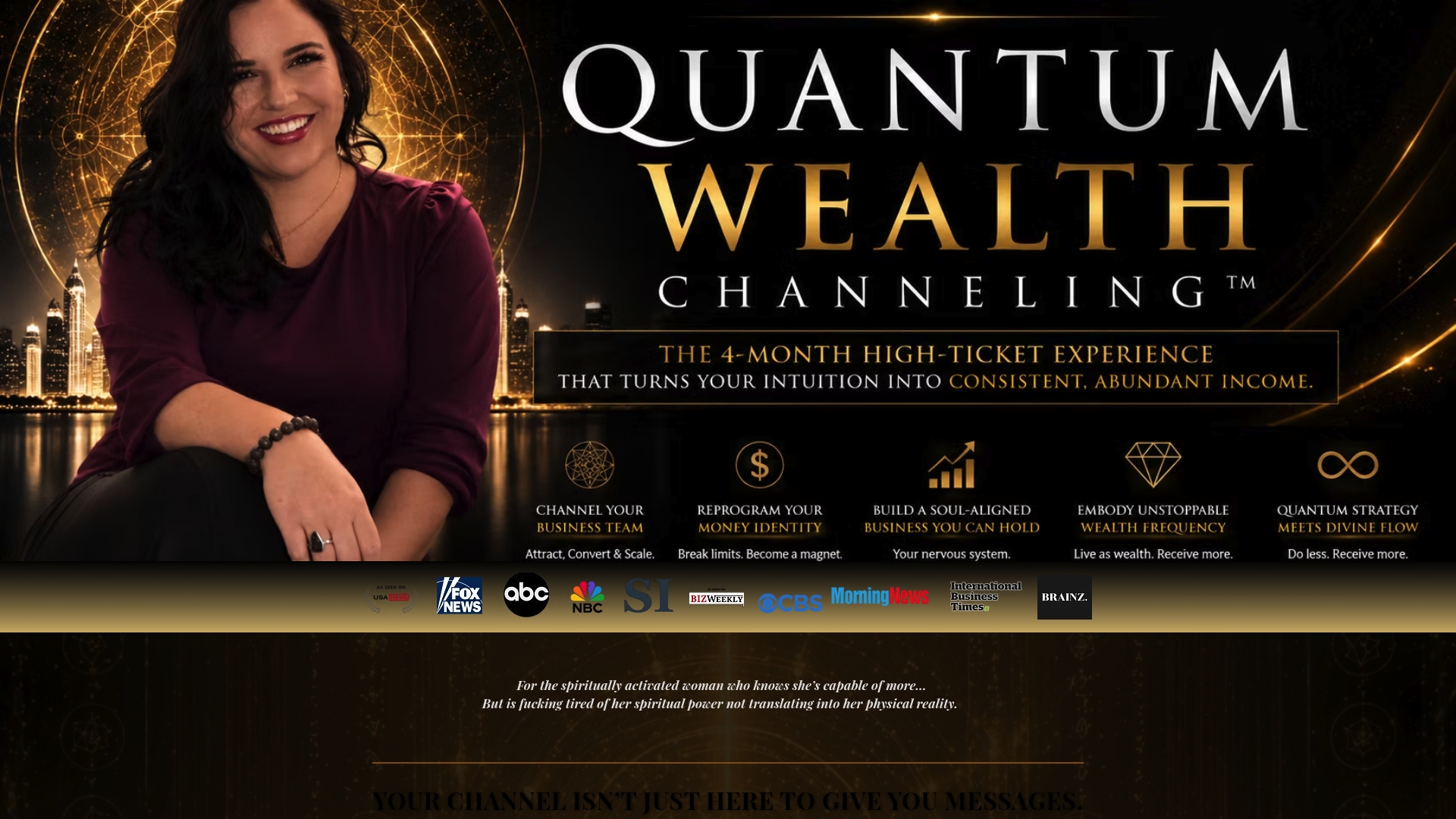
If this resonates, our Quantum Wealth Channeling program applies cohort structure directly to channeling, business, and wealth identity over four months.
[
For deeper, longer initiation work, Portal of the Gods runs ten months, and our Intuitive Income Reset offers a $7 starting point if you want to test the waters first.
FAQ
What is the role of a spiritual coach?
A spiritual coach helps you build self-trust, discernment, and practical follow through around intuitive guidance, rather than diagnosing or treating clinical conditions. The coach’s job is to hold space, ask questions, and structure accountability, not to direct your decisions for you.
What are 10 qualities of a good coach?
Strong coaches tend to share qualities like active listening, clear boundaries, confidentiality, consistency, curiosity, and the ability to hold space without judgment. Equally important are transparency about scope, a willingness to refer clients elsewhere when needed, structured accountability, and genuine presence during sessions, all of which the ICF ethics guidance treats as foundational.
What is the 70/30 rule in coaching?
Definitions vary across coaching schools, and there is no single, universally recognized standard for a specific rule about the proportion of speaking time. Informally, it is often suggested that the client should speak most of the session while the coach listens and reflects, though this is not a fixed industry guideline.
What did Billy Graham say about coaches?
We do not have a verified source for this quote, and attributing specific wording to a named individual without a reliable citation would not be accurate. If you encounter this quote elsewhere, we would recommend tracing it back to a primary source before repeating it.
Sources
Recommended
Comments