

9 Signs Intuitive Women Are Ready for Spiritual Coaching

Whether you are ready for spiritual or multidimensional coaching comes down to three things showing up together: discernment sharp enough to test what you receive, a nervous system steady enough to hold guidance without spinning out, and a willingness to turn insight into accountable physical action. If you recognize a pattern of pausing before reacting, feeling grounded during and after sessions, and following through on what you already know, you are likely ready. What follows gives you the checklist, the self-tests, and the ethical context to confirm it.
TL;DR:
Consistent follow-through on guidance and the ability to test messages over multiple days strongly indicate readiness for spiritual coaching.
Maintaining steady breath and heart rate during guidance sessions suggests a well-regulated nervous system capable of holding expanded states.
Having clear boundaries, respectful consent, and a track record of integrating insights into real decisions deems a person prepared for structured multidimensional work.
Engaging in daily practices like meditation and somatic exercises for several weeks helps develop the stability needed before committing to intensive programs.
Programs should provide transparent agreements, supervision, and techniques used, with red flags raised if they lack clear confidentiality and scope disclosures.
Table of Contents
1. The nine signs that tell you you’re ready
Readiness for this kind of work rarely announces itself as a single dramatic moment. It shows up as a cluster of smaller, checkable patterns across how you relate to guidance, your body, other people, and your own follow-through.
The UCLA Spirituality in Higher Education research found that people who actively engage in self-reflection, contemplation, and meditation show greater growth in qualities like equanimity and centeredness than those who do not. Those are the same qualities that tend to separate someone who is ready for intensive spiritual training from someone who is still building the foundation.
Here is what to look for, grouped into the domains that matter most:
Inner trust and discernment: you can pause before acting on a download and test it rather than obeying it automatically, and you notice when reactivity is driving a decision instead of clarity.
Somatic steadiness: your breath and heart rate stay relatively regulated during guidance, and you can return to the present moment within minutes of a session ending.
Boundaries and consent: you respect and expect clear agreements, you are comfortable asking a practitioner about their supervision or training, and you can hold confidentiality for yourself and others.
Practical capacity: you have the time, the financial bandwidth, and a rough plan for integrating what you learn, not just the desire to learn it.
A track record of integration: you can point to at least one past instance where spiritual insight changed a real decision, not just a private belief.
Someone who shows four or five of these consistently is usually ready to begin. Someone who shows one or two, inconsistently, is not broken. They are simply earlier in the process, and that is worth naming honestly rather than glossing over.
Pro Tip: Keep a running list of guidance you’ve received and what you actually did with it. The gap between the two tells you more about readiness than the guidance itself.

2. Three quick self-tests and practices to confirm readiness
You do not need a practitioner to run a first check on yourself. These three exercises, drawn from the practical translation work described in transpersonal coaching ethics guidance, give you observable signals in under two weeks.
The five-minute somatic check. Sit quietly, bring a piece of guidance to mind, and notice your breath, heart rate, and any tension. Steady breath and a settled body suggest you can hold expanded states without dysregulation; racing breath or a locked jaw suggest grounding work comes first.
The discernment triangulation. Take a message you have received and test it three ways: does it hold up over a few days, does it point toward a practical next step, and does your body relax or tighten when you sit with it. Agreement across all three is a strong signal.
The fourteen-day integration mini-project. Pick one piece of guidance and commit to one small action tied to it every day for two weeks, then track how often you followed through versus avoided it.
Practitioner guidance from the same source notes that readiness is demonstrated by consistent translation of guidance into micro-decisions, not by how vivid or dramatic the reception itself feels. If your fourteen-day project shows mostly follow-through and mild, manageable resistance, you are ready. If it shows avoidance or escalating anxiety, that is useful information, not a failure.
3. What to expect from a responsible program’s ethics and agreements
A program worth your time and money will look and feel structured, even when the content itself is expansive. ICF’s Code of Ethics recommends a written coaching agreement, clear confidentiality terms, and disclosure of scope and limits before any work begins, and those same standards translate well into multidimensional coaching containers.
Look for these signals before you enroll:
A written agreement outlining scope, confidentiality, and what is and is not included.
Clarity on the practitioner’s own supervision or peer accountability structure.
Disclosure of techniques used, including how expanded awareness states are approached and what the practitioner does if a session goes sideways.
A clear statement of what the program does not claim to do, including any mental health or medical scope.
Transpersonal coaching guidance emphasizes that a safe container depends on supervision and non-invasive techniques, with practitioners trained to recognize signs like dissociation and to have a plan if they appear. If a program cannot answer basic questions about agreements or supervision, treat that as a red flag rather than a detail to overlook.
4. If you’re not ready yet: where to focus first
Not being ready is not a verdict on your potential. It is simply a map of where your energy is best spent before you invest in something intensive.
Spend ten to twenty minutes daily on meditation, journaling, or a containment ritual that closes your practice cleanly.
Add a somatic practice, like slow walking, breathwork, or gentle movement, to build tolerance for expanded states without losing your grounding.
Find a small peer group or mentor relationship where you can test discernment out loud and get honest feedback.
Give yourself a real timeline, often several weeks to a few months, before committing to an intensive program, and use it to track follow-through the way the fourteen-day test does.
Pro Tip: A supervised integration diary, kept for four to eight weeks, is a simple way many coaches confirm a student’s follow-through before inviting them into deeper initiation work.
5. When I recommend a client take the next step

My own orientation is that channeling only matters when it becomes decisions, not just downloads. Before I invite someone into Quantum Wealth Channeling or Portal of the Gods, I am watching for steadiness under pressure, a willingness to be questioned, and at least one example of guidance they already acted on without my help.
When someone arrives with real hunger but thinner follow-through, I do not treat that as disqualifying. I point them toward shorter, structured entry points first, so the muscle of discernment and integration has room to strengthen before the container gets more advanced.
— Shantana Telise
How these programs meet you where you are
[
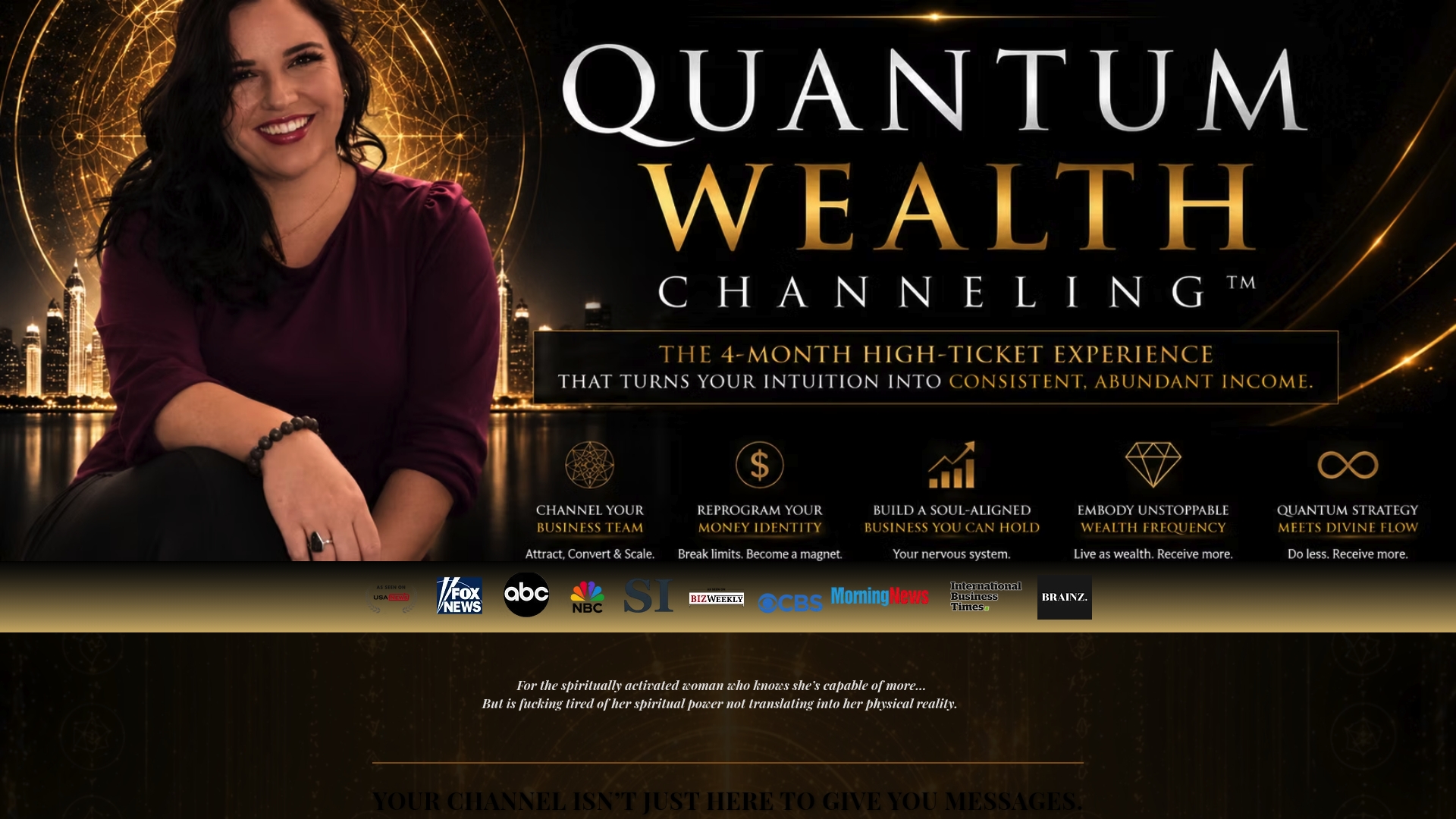
If the checklist above left you somewhere between “almost” and “ready now,” there is a program built for each stage. The Intuitive Income Reset is a low-stakes entry point built to reconnect your intuition with your relationship to income and test discernment before committing further. For those showing consistent follow-through and a readiness for structured application, Quantum Wealth Channeling is a four-month program built around applying channeling directly to wealth, business, and creation, with a supervised container rather than a one-off session.
For those who have already demonstrated sustained integration and want a longer initiation, Portal of the Gods is a ten-month container built for sovereign leadership and advanced multidimensional work.
Just starting to test discernment: Intuitive Income Reset.
Ready for applied, structured practice: Quantum Wealth Channeling.
Already integrating consistently and seeking depth: Portal of the Gods.
Each container includes structured support for translating what you receive into grounded, accountable steps rather than leaving you to interpret guidance alone.
Sources
The UCLA Spirituality in Higher Education findings document how active inner work builds equanimity over time. The ICF Code of Ethics outlines the agreement and confidentiality standards worth asking any coach about. Geldenhuys’s applied ethics research covers supervision and safe containers in depth, and a physiological study of channeling offers useful context on how channeling experiences vary between practitioners. For a grounded primer on building discernment day to day, Black Witch Coven’s guidance on trusting intuition is a practical companion piece.
FAQ
How do I know if I’m ready for spiritual coaching?
You are likely ready when you can pause and test guidance before acting on it, stay physically steady during and after receiving it, and point to a past example where you actually followed through on insight. If those three are inconsistent, targeted preparation usually closes the gap faster than waiting.
What are common misconceptions about coaching readiness?
Many people assume readiness means having dramatic or frequent spiritual experiences, but research on transpersonal coaching points to consistent translation of guidance into action as the real marker. Reception alone, however vivid, is not the same as readiness.
How is coaching readiness different from general personal development?
General personal development often focuses on habits, mindset, or skills you build independently, while readiness for multidimensional coaching specifically involves your capacity to hold expanded states safely and discern guidance with a practitioner’s support. The UCLA findings tie this readiness to active inner work like meditation and contemplation rather than passive learning.
What should a coaching agreement include before I enroll?
A responsible coaching agreement should disclose scope, confidentiality terms, and the techniques used, following standards outlined in the ICF Code of Ethics. It should also name any limits on what the program covers and clarify the practitioner’s own supervision structure.
How long does it typically take to become ready for an intensive program?
Timelines vary by person, but many practitioners use a four to eight week supervised integration diary to confirm follow-through before recommending an intensive container. If your fourteen-day self-test shows steady follow-through, you may already be close to ready.
Recommended
Comments