

What Practitioners Back About Womb Healing Benefits: Safety and Limits

Womb healing describes a set of spiritual and somatic practices, not a standardized medical treatment, and people who try it commonly report three kinds of benefit: emotional release and calm, a felt sense of spiritual connection, and indirect wellness effects like better sleep or body awareness. These outcomes are subjective. They are not a substitute for diagnosis, fertility care, or treatment of gynecologic conditions.
TL;DR:
Womb healing practices are subjective rituals focused on emotional release, spiritual connection, and increased body awareness, but they are not substitutes for medical care.
Breathwork, focused movement, journaling, and ritual framing are accessible techniques that can support relaxation, emotional processing, and intention-setting safely at home.
Rituals involving candles, intention, and ancestral acknowledgment can foster a sense of reconnection and stimulate creative or intuitive insights, though they lack measurable scientific outcomes.
Heat-based internal practices like vaginal steaming or hot-stone therapy pose real physical risks and lack supporting evidence, requiring caution and medical evaluation if symptoms arise.
Womb healing should complement, not replace, clinical diagnosis or treatment, especially for gynecologic conditions or persistent symptoms requiring medical assessment.
Table of Contents
Emotional benefits: relaxation, emotional processing, and self-trust
We think the emotional layer is where womb healing earns its reputation, and the mechanism is not mysterious. Slow, intentional breathwork activates the parasympathetic nervous system, which is why many participants describe a drop in anxiety within a single session. Pairing breath with focused attention on the pelvic area gives the nervous system a specific place to settle, rather than asking it to calm down in the abstract.
Ritual containers matter here too. A womb healing session often sets aside dedicated time and space for grief, anger, or old stories about the body to surface and move. That structure, more than any single technique, is what participants point to when they describe feeling lighter afterward. Over repeated sessions, many people also report a shift in how they relate to their own bodies: more willingness to notice physical sensation, more confidence setting boundaries, and a stronger instinct for saying no.
None of this is clinical. Spirituality and meaning-making correlate with better patient-reported outcomes in some public-health research, but that correlation describes a pattern across populations rather than a guarantee for any one person, and it does not turn a ritual practice into a treatment protocol.
What tends to show up across practitioner accounts and the limited research available:
Reduced perceived anxiety during and after breath-focused sessions
A defined space for processing grief, anger, or stored tension
Increased body awareness and comfort naming physical sensation
Greater willingness to set boundaries in relationships and work
Pro Tip: Start with five minutes of slow belly breathing before any womb-focused ritual. It gives your nervous system a baseline to return to if emotion surfaces quickly.
The honest caveat is that “feeling better” after a ritual is real and worth having, but it is a subjective report, not a measured clinical outcome, and should be held that way.
Spiritual benefits: reconnection, creativity, and meaning-making
Ceremony does something that information alone cannot: it marks a moment as significant. When a womb healing practice includes ritual elements, candlelight, intention-setting, ancestral acknowledgment, spoken affirmations, participants often describe a felt sense of reconnection to their bodies, their lineage, or something larger than their daily concerns. That feeling of reconnection is the actual product of the ceremony, not a side effect.

Many women also describe a noticeable uptick in creative flow and intuitive clarity after this kind of work. This tracks with what we see in channel-development and intuition-based practice more broadly: when the body feels safe enough to soften, attention frees up for ideas, imagery, and insight that stress had been crowding out. That is a plausible, reportable experience. It is not a measurable spiritual outcome in any scientific sense, and it should not be framed as one.
What participants commonly describe from ceremony-based practice:
A felt sense of connection to body, ancestry, or something larger than daily concerns
Increased creative flow or intuitive clarity following ritual work
A marked sense of occasion that makes an intention feel more real
Language or imagery for processing experiences that felt otherwise formless
We want to be direct about the boundary here. Spiritual experience is real as experience. It is deeply personal, genuinely meaningful, and worth taking seriously on its own terms. It is also not evidence of a physiological change, and claiming otherwise does a disservice to both the spiritual and the medical sides of a person’s care.
Common practices and safe micro-protocols you can try
Most womb healing work draws from a small set of accessible techniques. None require special equipment, and all can be adapted to your comfort level.
Breathwork: Four counts in, hold for four, six counts out, repeated for five minutes with one hand resting on the lower belly.
Gentle pelvic movement: Slow hip circles, cat-cow stretches, or seated pelvic tilts done without strain or forced range of motion.
Journaling prompts: “What has my body been holding that I haven’t named?” or “What would it feel like to trust myself here?”
Ritual framing: Lighting a candle, stating an intention aloud, and closing with a simple gesture of gratitude.
Sound and voice: Humming, toning, or group chanting in a circle format to release tension through vibration.
Start with one practice at a time. If you want structured guidance on the breath component specifically, our breathwork resource walks through a short guided sequence.
Safety, limits, and when to seek clinical care
Womb healing is not a treatment for gynecologic disease, infertility, or infection, and no reputable practitioner should present it as one. Harvard Health is explicit that vaginal steaming has no supporting evidence and that inserting unprescribed substances internally is inadvisable, and the same caution applies to hot-stone applications near the pelvis. A documented case report found that hot-stone postpartum therapy caused uterine burns and infection requiring antibiotics and surgical advice, which is a clear illustration of why heat-based internal practices carry real physical risk, according to the case record.
Seek medical evaluation for:
Unusual bleeding, persistent pain, or fever
Signs of infection, including unusual discharge or odor
Any symptom that worsens rather than improves with rest
ACOG’s guidance on premenstrual disorders emphasizes shared decision-making between patient and clinician, which is the same principle any trauma-safe facilitator should apply: consent at every step, clear opt-outs, and no internal touch without explicit agreement.
Practitioner perspective: how we frame womb healing and integration
As a Quantum Channel, Multidimensional Healer, and Spiritual Educator, we approach womb-focused work as one layer of a larger embodiment practice, never as a replacement for medical guidance. Our offerings center discernment: learning to tell the difference between genuine inner guidance and old fear patterns, then translating that clarity into grounded action.
Somatic practice supports this work by giving the body a felt reference point for truth. We encourage pairing any ritual practice with consistent self-care and, when physical symptoms appear, collaboration with a qualified clinician rather than ritual in place of care.
Long-term wellness patterns: hormones and cycle awareness
Some participants report that consistent somatic and breath-based practice, done alongside their regular health routines, correlates with steadier mood across their cycle and more consistent sleep. These are self-reported patterns, not measured hormonal outcomes, and they vary widely from person to person.
Cycle regulation specifically depends on far more than ritual practice: nutrition, sleep, stress load, and underlying medical conditions all play a documented role, and ACOG’s framework for premenstrual symptom management includes nutrition, exercise, counseling, and when appropriate, medication as the evidence-graded components of care. Somatic ritual can sit alongside that framework as a stress-reduction tool, since lower stress is broadly associated with more stable hormonal signaling, but it does not replace diagnosis or treatment for conditions like PMDD, endometriosis, or thyroid imbalance.

The honest framing is additive rather than curative: womb healing practices may support the nervous system regulation that makes other wellness habits easier to sustain, which in turn can support more stable cycles over time. That is a modest, plausible claim, and it is the one we are comfortable standing behind.
Where these practices come from: a brief cultural history
Rituals centered on the womb and pelvic region appear across many cultures and centuries, from postpartum closing ceremonies in parts of Latin America and Southeast Asia to lineage-based healing traditions passed through generations of women. Research on intravaginal herbal practices in a multiethnic Suriname population found that such customs remain common and culturally significant, even as researchers note the need for more study on their physical effects.
What ties these traditions together is not a shared technique but a shared premise: that the pelvic body holds emotional and generational memory worth tending deliberately. Modern womb healing work borrows the symbolic structure of these traditions, ceremony, intention, communal witnessing, while generally shedding the internal or high-heat elements that carry documented risk. That evolution reflects a broader shift in wellness spaces toward separating meaningful ritual from unproven physical intervention, a distinction worth carrying into any practice you choose.
Using womb healing responsibly as part of a whole-person plan
We see womb healing as one tool among several, never the whole plan. Pair it with consent-based facilitation, your own discernment about what feels true, and clinical care when your body asks for it. Ritual supports the nervous system; it does not replace a provider. For readers exploring ritual prompts to pair with somatic practice, Tarosyn’s spirituality resources offer journaling and reflection tools worth exploring.
— Shantana Telise
Guided support for translating insight into grounded action
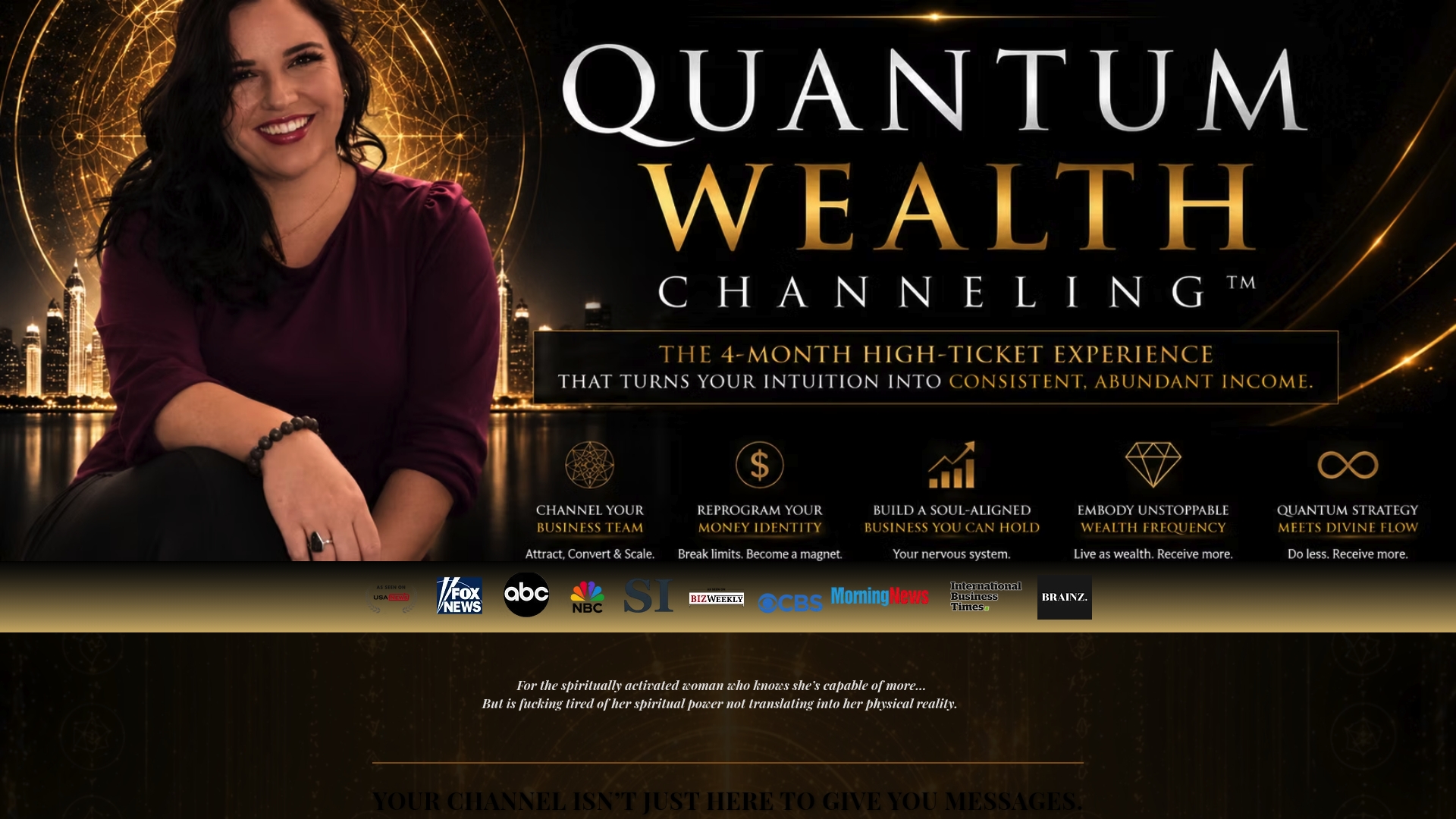
If this work resonates and you want structured support turning inner clarity into decisions you actually trust, Quantum Wealth Channeling is built for exactly that: a four-month container for strengthening discernment and applying guidance to real choices, not just insight for its own sake.
[
For a lower-commitment starting point, Intuitive Income Reset offers an accessible entry into reconnecting intuition with income.
We never claim a financial or clinical outcome. What we offer is structure for the discernment work itself.
FAQ
Which chakra is connected to the womb?
Many energy-work traditions associate the womb area with the sacral chakra, believed to govern creativity, emotion, and sensuality. This is a framework drawn from energy-based practice rather than an anatomical or medical claim, and different traditions describe the association somewhat differently.
What does the Bible say about womb healing?
Scripture references the womb primarily in the context of fertility, blessing, and divine knowledge of a person before birth, rather than describing womb healing as a defined practice. Modern womb healing rituals are not a biblical tradition; they draw more directly from somatic and energy-work lineages.
What is good for womb healing?
Gentle breathwork, pelvic-focused movement, journaling, and ceremony are the practices most consistently described as supportive, each working through relaxation and meaning-making rather than direct physical treatment. Harvard Health cautions against internal remedies like vaginal steaming, which has no supporting evidence and carries risk.
What is womb cleansing spiritually?
Spiritually, womb cleansing usually refers to a ritual intention to release stored emotion, old stories, or energetic residue tied to the pelvic area, expressed through breath, movement, or ceremony rather than any physical cleansing method. It is a symbolic practice, and Harvard Health notes that subjective feelings of improvement after ritual cleansing do not equate to measurable physical change.
Sources
Recommended
Comments