

One Reversible Step to Ground Heart Chakra Opening for Intuitive Women
Heart chakra opening is an experiential shift toward greater emotional openness, usually felt as chest warmth, unexpected tears, tenderness, and sharper boundaries, not a medical event or diagnosis. If you notice these sensations, pause and check for medical red flags first, then try one 1 to 3 minute heart-breathing practice before assuming anything deeper is happening.
TL;DR:
Heart chakra opening often presents as chest warmth, tingling, and emotional shifts like tearfulness or tenderness, accompanied by physical sensations without clear medical causes.
During this process, relationships tend to deepen through honesty or fall away if imbalanced, with vulnerability increasing and surface conversations becoming tiresome.
Safe practices include short breathing exercises, loving-kindness meditation, gentle backbends, and using crystals or oils as reminders rather than core tools.
Red flags such as chest pain with radiating pain, nausea, or fainting require immediate medical attention, while persistent panic or dissociation signal the need to pause practice.
Regularly testing small boundary changes and establishing a simple daily rhythm helps integrate heart-opening experiences into everyday life without relying solely on emotional states.
Table of Contents
What Does Heart Chakra Opening Actually Feel Like?
Anahata, the traditional name for the heart chakra, sits at the chest center and is associated in yoga traditions with love, compassion, and connection, framed as symbolic and experiential rather than a clinical marker. That distinction matters for how you interpret what you feel. You are tracking a shift in perception and sensation, not measuring a biological structure.
Physical signs of heart chakra opening tend to show up first. Chest warmth or a mild pressure behind the sternum is the most commonly reported sensation, often paired with fuller, slower breathing and spontaneous sighing. Some people notice tingling across the upper chest or shoulders, and a wave of tiredness after an intense emotional release is normal.
Emotionally, expect movement rather than a single peaceful plateau. Grief can surface without warning, sometimes tied to a memory you thought you had resolved. Tenderness toward strangers, a pull toward radical honesty, and a lower tolerance for surface-level conversation are all common markers of heart chakra activation.
Heartfulness research describes the heart region as home to multiple sub-points rather than one static center, and practitioners report a sequence of purification and expansion rather than a single dramatic event when engaging in heart-centered meditation practices. That framing helps explain why heart opening rarely feels tidy.
Pro Tip: Keep a short daily log, just three lines: what you felt, how long it lasted, and what triggered it. A single intense afternoon means little on its own, but a pattern across two or three weeks tells you something real is shifting.
Signs worth tracking in your notes include:
Warmth, tightness, or fluttering in the chest that comes and goes without a clear physical cause
Sudden tearfulness during ordinary moments, like a song or a conversation
A noticeable pull to speak truthfully even when it feels risky
Reduced patience for relationships or situations that feel one-sided
Fatigue or a need for solitude after emotionally intense days
One caution belongs here without qualification: sudden chest pain accompanied by shortness of breath, sweating, nausea, or pain radiating into the arm or jaw is a medical emergency, not a spiritual symptom. Call emergency services. Sort that out before you sort out anything energetic.
How Heart Opening Changes Your Relationships and Inner Life
Discernment and compassion tend to rise together, not in opposition. That surprises people who expect heart opening to make them softer and less selective. The opposite usually happens: as empathy sharpens, so does your ability to notice when a relationship, client, or commitment costs you more than it gives back.
A heart-aligned boundary sounds different from an old, fear-based boundary. Instead of going silent or over-explaining, you might say plainly, “I care about you, and I’m not available for this conversation right now.” That single sentence holds both compassion and a limit, which is the actual signature of an open heart chakra rather than a hardened one.
Relationally, three shifts tend to appear during heart chakra healing:
Existing connections either deepen through more honest conversation or naturally fall away as their imbalance becomes obvious
Vulnerability increases, meaning you may disclose things earlier in a relationship than your old pattern allowed
Small talk starts to feel draining, and you gravitate toward people willing to go beneath it
The emotional rhythm during this period is cyclical, not linear. A release, often grief or anger surfacing from an old wound, tends to precede a stretch of steadier compassion and clearer priorities. Expect the wave pattern rather than a straight climb. Business decisions and creative choices made during the steadier phase, after a release, are usually more reliable than ones made mid-wave, while emotion is still running high.
Practical Techniques for Heart Chakra Opening and Healing
None of these practices require special equipment or advanced training. Start with the shortest version of each before working up to longer sessions, and stop immediately if you feel panic or dizziness rather than calm.
Micro-practices, 1 to 5 minutes:
Heart breathing. Place one hand on your chest, inhale for a count of four, hold for one, exhale for a count of six. Repeat for six to eight breaths, imagining the breath moving directly into and out of the chest.
Mini-Metta. Silently offer one phrase, “May you be at ease,” first to yourself, then to someone you love, then to someone neutral. Three rounds is enough to shift a stress response.
YAM seed sound. Chant “YAM” (rhymes with “mom”) on a long exhale, letting the sound vibrate in the chest rather than the throat. Five repetitions is a reasonable starting dose.
Longer practices, 10 to 30 minutes:
The full loving-kindness (Metta) sequence extends the mini-version through five stages: yourself, a loved one, a neutral person, a difficult person, and finally all beings. Guided compassion meditations of this kind produce measurable short-term shifts in emotional regulation in controlled research, which is a reasonable evidence base for why the sequence works rather than just feeling nice.
Meditation on Twin Hearts is a longer, structured practice that combines compassion cultivation, self-healing visualization, and open awareness, and it appears in both experimental and practitioner literature as a documented method for cultivating heart-centered states. If you are new to it, look for a guided recording rather than attempting the full sequence from memory on your first pass.
Movement:
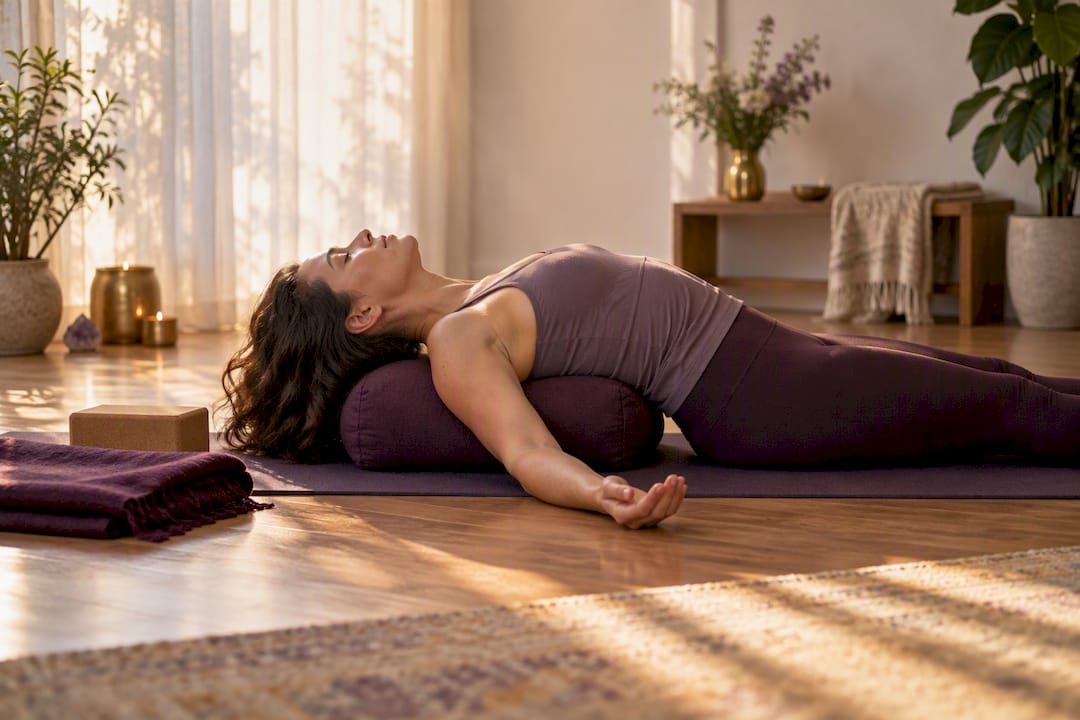
Gentle backbends open the chest physically, which often supports the emotional opening you are working toward. Camel pose, bridge pose, and supported fish pose (with a bolster under the shoulder blades) are accessible starting points. Warm up your spine first with a few rounds of cat and cow, and always follow a backbend with a counterpose like a gentle forward fold or knees to chest. Stop the pose immediately if you feel panic, dizziness, or dysregulation rather than release.
Ritual anchors:
A written forgiveness letter, one you write but never send, is a widely used technique for heart chakra healing tied to old wounds, and forgiveness practices are linked in research to reduced anxiety and improved well-being. Rose quartz, green aventurine, and essential oils like rose or bergamot are common heart chakra anchors, but treat them as attention tools rather than the mechanism itself. The breath, the attention, and the compassion practice are doing the actual work; the crystal on your desk just helps you remember to do it.
When to Pause: Safety Limits for Heart Chakra Work
Two categories of red flags deserve direct attention, and both matter equally.
Medical red flags come first. Chest pain paired with shortness of breath, sweating, nausea, fainting, or pain radiating into the arm, neck, or jaw requires emergency medical care immediately. Do not attribute these symptoms to spiritual practice and wait them out.
Psychological red flags are subtler but still serious. Escalating panic, derealization, insomnia lasting more than a few nights, or racing thoughts that will not settle are signs to pause your practice, not push through it. Ground yourself with slow exhales and, if the pattern persists beyond a few days, reach out to a qualified mental health professional.
To scale any practice safely:
Shorten the session, drop from twenty minutes to five if intensity spikes
Switch to simple grounding breaths (slow exhale, feet on the floor) instead of visualization
Practice around people you trust rather than alone during an intense stretch
Apply one rule to any guidance you receive: if it is not reversible and low cost to test, slow down before acting on it
Turning Heart Opening Into Grounded, Everyday Decisions
Heart opening loses most of its value if it stays internal. The bridge between sensation and result is a small, reversible action, one you can test and evaluate rather than a leap of faith you have to defend later.
Pick one low-stakes decision this week. Change a sentence on your website, adjust a price on a single offer, or send one honest email you have been avoiding. Set a review date, seven to fourteen days out, and actually check what happened rather than letting it drift.
Boundary work benefits from a script you can reuse under pressure. A compassionate no might sound like, “I want to support you, and I don’t have capacity for this right now.” An honest request might sound like, “I need clearer terms before I say yes.” Both hold warmth and a limit at once, which is the practical output of a more open heart chakra.
Build a simple daily rhythm around this instead of relying on willpower:
Five to ten minutes of heart breathing or Metta each morning
A two-minute evening review: what did I test today, and what did I learn?
A weekly check-in with a trusted friend, mentor, or community, since discernment sharpens faster with outside reflection than in isolation
The Evidence and Experience Behind This Guide
Shantana Telise is a Quantum Channel, Multidimensional Healer, and Spiritual Educator who works with intuitive women translating inner guidance into grounded action. The techniques above are not invented for this article. Heartfulness research documents heart-region sub-points and practitioner-reported sequences of expansion, and heart-focused meditation has been linked to improved heart and brain coordination in longer-term practitioners. That is a reasonable case for taking breath and compassion practice seriously as tools, not just as comforting rituals.
Diet and Daily Habits That Support Heart Chakra Health
What you eat and how you move through your day either supports steady heart chakra energy flow or keeps you scattered and reactive. Green, leafy foods, along with heart-healthy staples like avocado, olive oil, and green tea, are traditionally associated with Anahata, likely because green is the chakra’s associated color rather than any proven biochemical link. Treat the food connection as symbolic support, not a treatment plan.
Hydration matters more than most people realize during heart chakra work, since dehydration amplifies fatigue and irritability, both of which can be mistaken for energetic disturbance. Time outdoors, especially around trees or green space, is a low-effort habit that repeatedly shows up in practitioner reports as calming to the chest and shoulders.
Sleep consistency is underrated here. A single late night rarely derails heart-centered work, but a chronic pattern of five hours of sleep will blunt your ability to notice subtle sensations and will shorten your patience for the boundary work heart opening tends to demand. Limiting doom-scrolling and heavy news consumption before bed protects the nervous system state you need for this practice to land.
Movement matters as much as stillness. A daily walk, light stretching, or the backbend sequence covered earlier keeps the physical chest open, which supports rather than replaces the emotional work. None of these habits force heart chakra opening on a schedule. They simply remove friction so the natural process has room to move.
Healing Heart Chakra Blockages From Old Emotional Wounds
A blocked heart chakra usually traces back to a specific wound: a betrayal, a loss, a pattern of rejection, or a relationship where love came with conditions. The chakra does not stay closed by accident. It closes as protection, and it tends to reopen only once that protection no longer feels necessary.
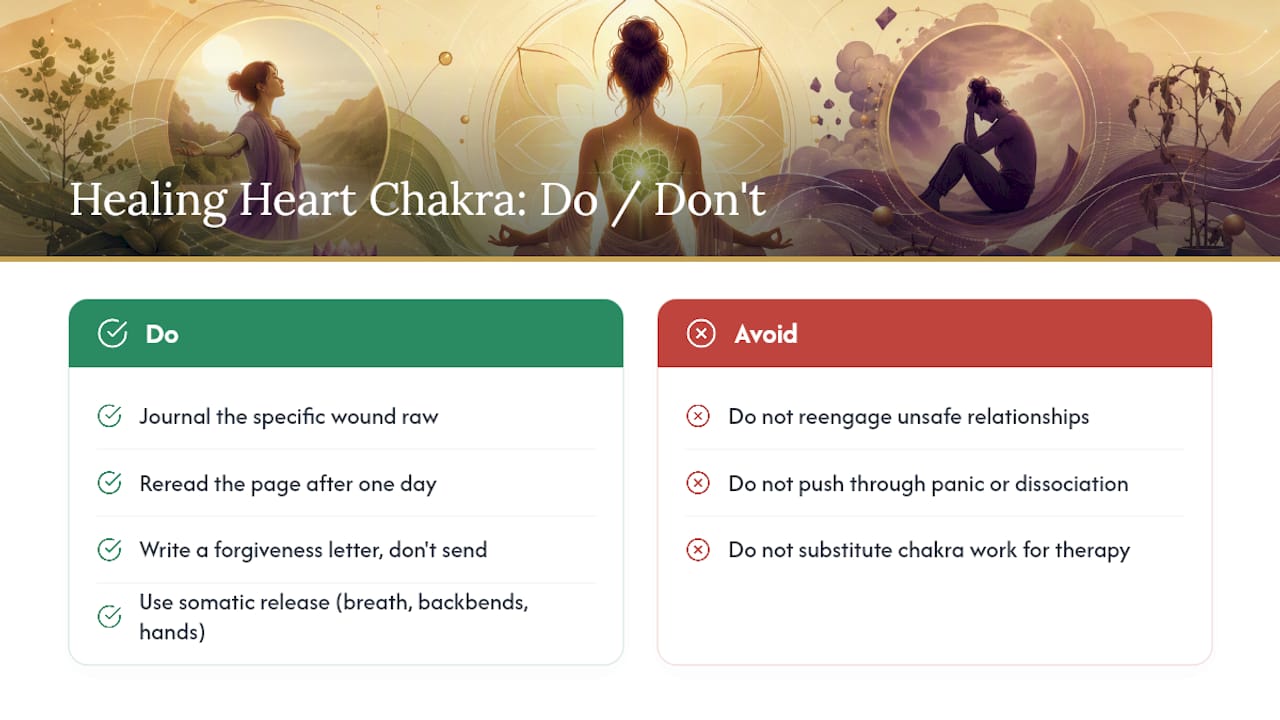
Journaling is the most accessible starting point. Write about the specific event or relationship without editing for how it sounds, then set the page aside for a day before rereading it. The forgiveness letter mentioned earlier, written but never sent, works particularly well for wounds tied to a specific person, since it lets you process the emotion without reopening a relationship that may not be safe or appropriate to reengage.
Somatic release matters as much as the cognitive story. Trauma tends to sit in the body as tension, particularly across the chest and shoulders, so gentle backbends, slow exhale breathing, or simply placing both hands on the heart and breathing into that spot can loosen a blockage that talking alone will not touch. If a particular memory triggers overwhelming panic or dissociation rather than release, that is the moment to stop the practice and bring in a qualified mental health professional. Heart chakra healing techniques are a complement to that kind of support, not a substitute for it.
Progress here rarely looks like a single breakthrough. Expect layers: one wound softens, life continues, and a related layer surfaces months later. That is normal sequencing, not failure.
How the Heart Chakra Connects to Your Other Energy Centers
Balancing the heart chakra rarely happens in isolation, since it sits at the midpoint of the traditional seven-chakra system, bridging the three lower, survival-oriented centers with the three upper, expression-oriented ones. When the heart is closed, energy tends to get stuck below it, showing up as scarcity thinking, over-control, or anxiety rooted in the solar plexus and root chakras.
A grounded root chakra, the sense that your basic safety is not in question, makes heart opening far less frightening, since you are not risking survival by softening your defenses. Similarly, a clear throat chakra lets the honesty that heart opening produces actually get spoken instead of staying trapped as unexpressed tension.
Practically, this means pairing heart work with grounding: a few minutes of feeling your feet on the floor or visualizing roots extending downward before you begin heart breathing or Metta. If you notice the heart opening but your throat tightens whenever truth wants to come out, that is a signal to work both centers together rather than treating the heart chakra as an isolated project. Holistic heart chakra healing is less about perfecting one center and more about restoring flow through the whole system.
A Personal Note on Working With What Opens
The rawness that comes with heart opening is not a sign you are doing it wrong. It is usually a sign something real finally has room to move. What I have seen matter most is not the intensity of the opening itself, but what you do with it afterward.
Pick one reversible action this month and actually test it. Review what happened honestly, with a trusted community around you rather than in isolation, and let that outcome, not the emotion alone, guide your next step.
— Shantana Telise
Guided Support for Turning Heart Opening Into Grounded Wealth Work
Reading about heart chakra opening gets you insight. Sitting inside structured, paced guidance with community accountability around you gets you integration, which is where Shantana Telise Healing’s approved programs come in.
[

If the boundary work and reversible testing described above resonate but you want more structure than a solo practice, a few paths fit depending on where you are. The Intuitive Income Reset is an entry point built for reconnecting intuition with income decisions, a way to test this work before going deeper. Quantum Wealth Channeling is a four-month program for women translating channeled guidance into real business and wealth decisions, exactly the kind of paced, embodied integration this article points toward without promising a specific financial result. For readers focused on channel development itself rather than wealth application, The Art of Divine Channeling Masterclass is Shantana Telise’s established nine-month body of work on strengthening the channel.
None of these replace medical or mental health care, and none guarantee an outcome. What they add is pacing, community, and a structured way to keep testing your guidance instead of leaving it as a feeling that never becomes a decision. Start with the Quantum Wealth Channeling page to see if the four-month structure fits where you are right now.
Sources
For readers who want to go deeper into the research behind these practices, the Heartfulness meditation research on chakra physiology and the Meditation on Twin Hearts compassion study are strong starting points. For structuring guidance sessions with any practitioner safely, see this practical guide to spiritual guidance session best practices.
FAQ
What Trauma Is Stored in the Heart Chakra?
Grief, betrayal, and relationship wounds involving conditional love are the patterns most commonly linked to a closed or blocked heart chakra. These are described in spiritual traditions as experiential and symbolic patterns tied to the chest center, not a diagnosed medical condition.
How Do I Unblock My Heart Chakra?
Start with heart breathing, Metta (loving-kindness meditation), and gentle chest-opening yoga poses like camel or supported fish. Forgiveness writing exercises and journaling about the specific wound behind the block also help move stuck emotion.
How Long Does It Take to Unblock the Heart Chakra?
There is no fixed timeline. Heart chakra opening tends to happen in layers over weeks to years rather than as a single event, with periods of intensity followed by steadier stretches of compassion and clarity.
How Do I Know if My Heart Chakra Is Closed?
Common signs include difficulty trusting others, chronic guardedness in relationships, numbness toward things that used to move you emotionally, and a pattern of over-giving or over-controlling to avoid vulnerability. A closed heart chakra often shows up physically too, as chronic tightness across the chest and shoulders.
Recommended
Comments