

Neuroscience Backed Boundaries in Business for Intuitive Women

Boundaries in business, for a channeler, means the practiced ability to open your energy for guidance and close it again at will, so intuition serves your decisions instead of running your nervous system. The first move, right now, is a three-second anchor: feel your feet, exhale once, and say silently “I choose what I receive.” What follows is the research, the ethics, and the protocols that make that anchor sustainable.
TL;DR:
Brain studies confirm that channeling involves coordinated brain activity and distinct cognitive states, supporting its legitimacy as a practice.
Regulating porosity is a skill that allows channelers to open for receiving guidance and close for decision-making, preventing energetic and mental fatigue.
Clear protocols for session scope, role, and consent are essential to prevent boundary erosion and ensure ethical, grounded business practices.
Signs of boundary collapse include exhaustion, muddled decisions, and vague responses to clients, which can be remedied with quick grounding and re-contracting.
Structured programs like Quantum Wealth Channeling help practitioners build discernment and maintain energetic boundaries to translate channeled guidance into tangible results.
Table of Contents
Why energetic boundaries matter for your channel and your business
Switch skills: opening for guidance and closing for grounded decisions
Session and business protocols that protect your channel and the client relationship
Daily and weekly routines that sustain discernment and grounded channeling
Sovereignty, discernment, and translating guidance into decisions
If you want guided support with your channel and your boundaries
Why energetic boundaries matter for your channel and your business
Channeling has long carried a quiet suspicion, as if receiving guidance for wealth or business decisions were somehow less rigorous than making them from logic alone. Recent EEG research pushes back on that assumption. A 2026 study on brain activity during mediumistic states found coordinated activity across multiple frequency bands during channeling tasks, supporting the case that these are distinct cognitive states, not evidence of impairment. A related PLOS One qEEG study recorded increases across theta, alpha and beta bands during trance writing, alongside preserved or sharpened linguistic complexity.
That matters for anyone building a channel led business, because it reframes porosity (the tendency to absorb what is around you) as a skill to regulate, not a symptom to hide. It also raises the ethical stakes. The Spiritual Care Association’s code of ethics calls for role clarity, informed consent and defined scope, so a practitioner never becomes a stand-in decision-maker for a client.
Channeling states show measurable, coordinated brain activity, not disorganization.
Porosity is a regulated capacity, not a fixed vulnerability.
Ethical practice requires clear role, scope and consent before any session begins.
Recent EEG research shows that mediumistic trance states sustain complex linguistic output while showing distinct spectral patterns, which means the experience your body has while channeling has a measurable, non-pathological signature.
Switch skills: opening for guidance and closing for grounded decisions
Think of porous and closed as two settings on the same instrument, not two different people. Porous is receptive, diffuse, useful for receiving. Closed is bounded, directive, useful for deciding. Neither is more “spiritual” than the other, and moving between them deliberately is the actual skill.
To open before a session or a channeling block:
Ground your feet and take three slow breaths, lengthening the exhale.
Set a spoken or silent intention naming what you are opening to receive.
Soften your gaze or close your eyes to signal the shift to your nervous system.
To close before you sign anything, price anything, or answer a client:
Take one sharp exhale and place both feet flat on the floor.
State plainly, “I am closed and deciding from my own authority.”
Do something physical, such as drinking water or touching a solid object, to confirm the switch.
Use the open setting for creative work and receiving impressions. Use the closed setting for calls, contracts, and any decision involving money.
Pro Tip: Never negotiate a fee or sign an agreement while still in the open, receptive setting: close first, then decide.
Session and business protocols that protect your channel and the client relationship
A channel led business needs the same structural clarity as any other, expressed in language suited to the work. Before a session begins, state your role, the scope of what you offer, and the limits of what guidance can promise.
Name your role plainly: “I am a channel and facilitator, not a medical or financial authority.”
State scope up front: what the session covers, what it does not, and how long it runs.
Confirm consent verbally or in writing before any channeled material is shared.
Include cancellation, rescheduling, and follow-up terms in your intake paperwork.
To close a session and release the energetic exchange, a short spoken ritual works better than an abrupt goodbye. Something as simple as thanking the guidance, stating the session’s end, and returning attention to the room gives both practitioner and client a clean stopping point.
The practitioner’s role, scope of service and consent must be defined before spiritual work begins, so the client retains their own authority.
That principle, drawn from the Spiritual Care Association’s ethical framework, doubles as a business safeguard. Clear scope prevents the quiet creep where a paid session turns into unpaid ongoing counsel, and clear fee terms protect your energy as much as your income.
Signs your boundaries are eroding, and what to do about it
Boundary erosion rarely announces itself. It shows up as exhaustion after sessions that used to energize you, decisions that feel muddled instead of clear, or a growing attachment to channeled material that makes it hard to separate guidance from your own wishful thinking. Another common sign is answering client messages from the open, porous setting instead of the closed one, which often produces vague or overly accommodating responses.
When you notice these signs, act quickly rather than waiting for a full reset day:
Ground immediately: feet on the floor, one long exhale, hand on your sternum.
Do a sixty-second energetic close using the same cue you use after sessions.
Re-contract with the client if needed: “Let’s revisit scope before we continue.”
Pro Tip: A short, direct re-contracting phrase said early prevents weeks of unclear boundaries later.
If exhaustion or blurred discernment persists past a few sessions, pause new bookings and consult a peer or supervisor rather than pushing through alone. Consistent boundary collapse is a signal to review your caseload, not a personal failing.
Daily and weekly routines that sustain discernment and grounded channeling
Sustainable channel work depends on rhythm more than willpower. A short morning practice, five to ten minutes of grounding, breath, and a stated intention about how you want to relate to money and guidance that day, sets the tone before any session or business decision happens.
Morning: ground, breathe, and set an intention that includes your wealth identity for the day.
Before each session: run your opening cue and confirm scope with the client.
After each session: run your closing cue and note anything that felt porous or unclear.
Weekly: review your energy budget, client load, and whether your fees still match your capacity.
Anthropological and psychological research on porosity and absorption.pdf) describes porosity as a permeable mind-world boundary and absorption as an attentional style that increases the likelihood of spiritual presence experiences. That research reframes porosity as a trait to toggle deliberately, not a liability to fear, which is exactly what a weekly audit trains you to do.
A weekly review of your client load and financial boundaries also keeps scope creep from becoming your default. If a service page from trance channeling work or a community discussion on early channeling experiences resonates with where you are, revisiting that material during your weekly check-in can sharpen the routine further.
Sovereignty, discernment, and translating guidance into decisions

As a Quantum Channel and Multidimensional Healer, I have watched the same pattern repeat across women building wealth-focused, channel led businesses: the guidance was never the problem. The absence of a boundary around it was.
Discernment is not a personality trait you either have or lack; it is a skill you develop by balancing intuitive guidance with practical business decision-making, as described in Scientist to Entrepreneur. It is a skill you build the same way you build any other business infrastructure, through repetition, clear checkpoints, and a willingness to close the channel long enough to test what you received against reality. Treating boundary practice as ongoing skill development, rather than a one time fix, is what lets guidance become decision, and decision become physical result.
— Shantana Telise
If you want guided support with your channel and your boundaries
Reading about switch skills is one thing. Practicing them inside a structured container, with someone who has built the same discernment you are building, moves faster. Programs exist that focus on strengthening your channel, sharpening discernment, and translating what you receive into grounded decisions and physical results.
[
The Intuitive Income Reset is an entry-level offering designed to reconnect intuition with income.
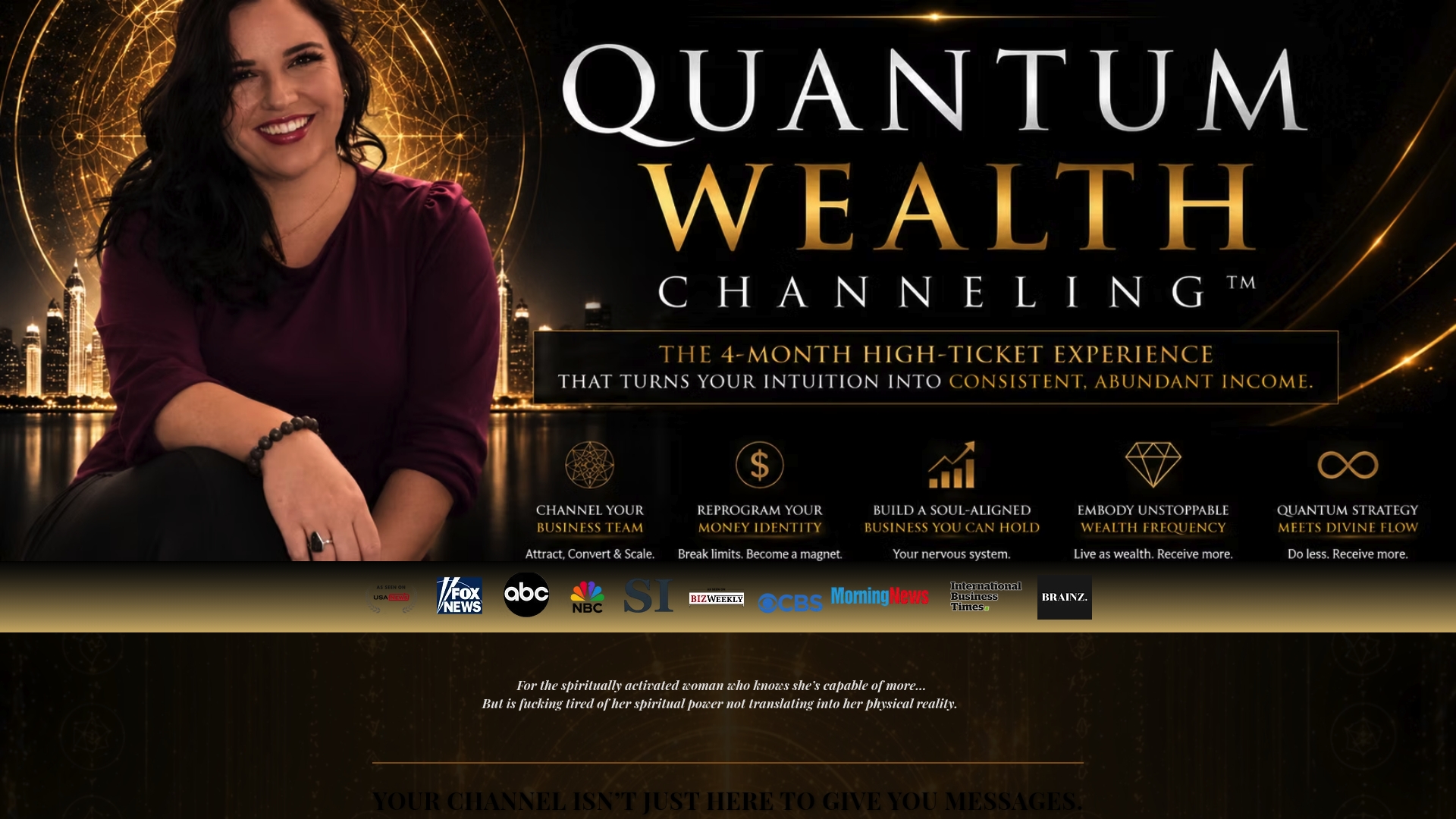
Quantum Wealth Channeling is a program applying channeling principles to wealth, business, and creation over several months.
The Art of Divine Channeling Masterclass offers an extended path for deepening channel development.
Portal of the Gods is a long-term initiation focused on sovereign leadership and quantum wealth.
If you are ready to build discernment and grounded wealth decisions inside a structured program, start with Quantum Wealth Channeling.
Sources
FAQ
What are energetic boundaries for a channeler in business?
Energetic boundaries are the practiced ability to open your channel for guidance and close it again for grounded decisions, so intuition informs your business without overriding your own authority. They function as both a spiritual practice and a business safeguard.
Is channeling a sign of a mental health condition?
No. Recent EEG research on mediumistic states shows coordinated, distinct brain activity during channeling, which supports treating it as a non-pathological cognitive state rather than a symptom of illness.
How do I know if my boundaries are collapsing?
Common signs include exhaustion after sessions that used to feel energizing, muddled decision-making, and difficulty separating channeled material from your own wishful thinking. A quick grounding reset and a re-contracting conversation with the client usually address it early.
What should I include in a session opening to protect my boundaries?
State your role plainly, define the scope of the session, and confirm consent before sharing any channeled material. This practice reflects the Spiritual Care Association’s ethical standards for role clarity and informed consent.
Which program helps most with building boundaries as a channeler?
Quantum Wealth Channeling applies channel development directly to wealth and business decisions over four months, while the lower-commitment Intuitive Income Reset offers a short first step for reconnecting intuition with income.
Recommended
Comments