

3 Phases to Recover From Spiritual Burnout With Scripture and Grounding
Spiritual burnout is a deep exhaustion at the level of meaning and identity, not the kind of tired that a good night’s sleep fixes. It shows up when your connection to purpose, faith, or calling has been running on empty for too long, and it’s different from ordinary fatigue or clinical depression in important ways. The good news: recovery is genuinely possible, though it usually takes more than rest alone. It takes rest, boundaries, and a return to what actually gives your life meaning. The sections below walk through the signs, the causes, what scripture says about it, and a real roadmap forward.
TL;DR:
Spiritual burnout often stems from identity fusion with roles and overcommitment, making recovery difficult without addressing underlying patterns.
Rest alone is insufficient; establishing boundaries, delegating responsibilities, and reevaluating core values are critical steps in recovery.
Lasting healing can take several months, with gradual progress, consistent pacing, and grounding rituals supporting sustainable renewal.
Severe symptoms like hopelessness, inability to function, or PTSD require immediate professional mental health support alongside spiritual practices.
Guided energetic work and support packages can accelerate recovery after initial stabilization, especially when burnout persists despite self-care efforts.
Table of Contents
What Are the Signs of Spiritual Burnout?
Spiritual burnout rarely announces itself with a single dramatic moment. It creeps in, and the first thing most people notice is numbness. Practices that once felt alive, whether that’s prayer, worship, service, or quiet reflection, start to feel like items on a checklist. You go through the motions because stopping feels scarier than continuing on autopilot.
The signals tend to cluster into three categories:
Emotional: flatness, indifference toward things that used to move you, a nagging sense that the meaning has drained out of your practice
Behavioral: pulling away from your faith community, performing rituals mechanically, reaching for distractions or numbing habits more than usual
Physical: fatigue that doesn’t lift with sleep, appetite or sleep pattern shifts, getting sick more easily than normal
One useful distinction: burnout tends to concentrate around a specific role or source of meaning, while clinical depression tends to spread into a global sense of worthlessness that touches everything. Researchers have found that a large share of burnout variance comes down to one factor: how meaningful the work still feels to the person doing it. When purpose fades, burnout follows close behind. If your symptoms are severe or persistent, a professional evaluation is worth pursuing before assuming it’s “just” spiritual fatigue.
What Causes Spiritual Burnout?
Most cases trace back to a handful of recognizable patterns, and identifying yours is often the first real step toward change.
Identity fusion. When a role, whether pastor, healer, caregiver, or “the strong one” in your community, becomes your entire identity, every setback in that role feels like a threat to your existence. Recovery research points to separating self from role as one of the most effective long-term fixes, because it gives you somewhere to stand when the role wobbles.
Chronic overcommitment. Saying yes without a pause, week after week, is a pace problem more than a devotion problem.
Moral injury and harmful dynamics. Spiritual manipulation, unrealistic expectations from leaders or community, and feeling used rather than seen all accelerate depletion.
Too much doing, not enough integration. A nervous system that never gets to process what it’s been through will eventually protest.
Comparison and performance-based faith. Measuring your spiritual life against someone else’s highlight reel turns practice into a competition you can’t win.
What Does the Bible Say About Spiritual Burnout?
Scripture doesn’t treat burnout as a moral failure. It treats it as a signal to rest and redistribute the load. Jesus’s invitation in Matthew 11:28, “Come to me, all you who are weary and burdened, and I will give you rest,” is often the first passage pastoral counselors point to, and for good reason: it frames rest as an invitation, not a reward for finishing everything first.
The pattern repeats elsewhere. Genesis and Exodus establish Sabbath as a built-in rhythm, not an occasional luxury. Mark 6:31 shows Jesus telling his own exhausted disciples to come away and rest before doing anything else. Exodus 18 is maybe the most practical example: Moses’s father-in-law watches him try to judge every dispute alone and tells him, bluntly, to delegate before he collapses.
The reframe worth sitting with: rest isn’t a consolation prize for underperforming. It’s a discipleship practice in its own right.
Rest as obedience, not failure
Delegation as wisdom, not weakness
Community bearing the load together, as the Liahona’s guidance on letting go of others’ expectations describes
Pro Tip: If your instinct when you feel depleted is “I just need to pray more,” pause. Sometimes more spiritual effort is exactly the wrong first move. What you may actually need is sleep, a boundary, or a conversation with someone who can carry part of the load with you.
How Do You Recover From Spiritual Burnout?
Recovery isn’t linear, and it isn’t instant. Think of it in three phases.
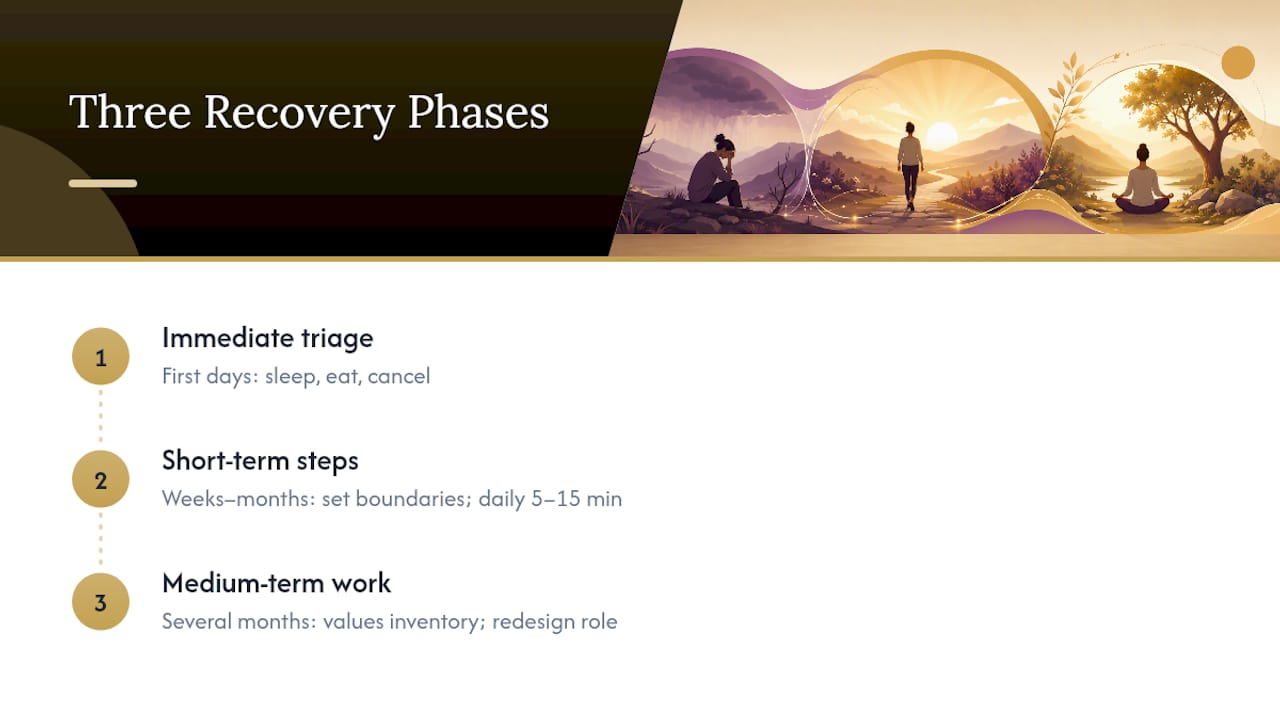
1. Immediate triage (first few days). Cancel what you can. Sleep. Eat real food. If you’re having thoughts of self-harm or can’t function at all, get medical or therapeutic support right away rather than waiting to see if it passes.
2. Short-term steps (a few weeks to a few months). This is where boundaries get built. Practice a simple script: “I can’t take that on right now, but I can revisit it in a month.” Delegate one task this week that you’ve been white-knuckling alone. Add a small daily meaning practice, five to fifteen minutes of something that actually feeds you rather than depletes you, and reconnect with one safe person or group rather than diving back into full community involvement.
3. Medium-term work (several months). This phase is about structural change: a values inventory to identify what actually matters versus what you’ve been performing, and possibly a redesigned role if the old one no longer fits who you’re becoming. Recovery at this stage often involves boundary-setting, community support, and steady pacing rather than any single breakthrough moment.
Pacing matters more than people expect, and grounding rituals can support this process effectively. After any intense spiritual or energetic work, give yourself one to a few days of integration time, focused on grounding, sleep, and minimal stimulation, before layering on the next practice. Grounding exercises built for exactly this kind of pacing can help prevent the re-depletion cycle that catches so many people off guard.
Track your progress with something concrete: a weekly journal entry on energy, joy, and consistency. Expect the line to zigzag. Mild burnout can start easing in weeks; more severe, long-standing burnout can take the better part of a year to fully resolve.
Pro Tip: Don’t judge your recovery by how you feel on any single day. Judge it by the trend across a month. Nonlinear progress is still progress.
When Should You Seek Professional Help?
Some signs mean it’s time to bring in a clinician, not just a mentor or spiritual director. Watch for:
Suicidal thoughts or a sense of hopelessness that won’t lift
Inability to function at work, home, or in relationships
Symptoms consistent with PTSD or a major depressive episode
Look for a trauma-informed therapist, ideally one who understands or respects your faith background, and pair that with a spiritual director or pastoral counselor if you want both dimensions addressed. These two forms of support work well together rather than in competition. A first clinical visit typically involves an intake conversation about your history and symptoms, not an immediate diagnosis, so there’s no need to over-prepare for it.
How Shantana Approaches Recovery and Integration
A healer works with women navigating this kind of depletion, using multidimensional channeling and energetic recalibration alongside the practical steps outlined above. This approach treats energetic work as one layer of an integrated recovery plan, not a replacement for rest, boundaries, or clinical care when that’s warranted.
Energetic recalibration sessions can be paired with grounding and integration time, consistent with the pacing described earlier
Practitioner-led work fits best once immediate triage is complete and a client is stable enough to engage in deeper realignment
Techniques like elemental healing focus on restoring energetic boundaries that overcommitment tends to erode
Modalities such as lightcode work are introduced gradually, respecting each client’s pace rather than forcing rapid transformation
Recovery Takes Longer Than Most People Are Told, and That’s Not a Failure
Most advice on spiritual burnout treats it like a scheduling problem: block off a retreat weekend, take a sabbatical, come back refreshed. That’s incomplete. The research on meaning and burnout suggests something slower and more structural is usually needed, a genuine separation between who you are and the role you’ve been performing.
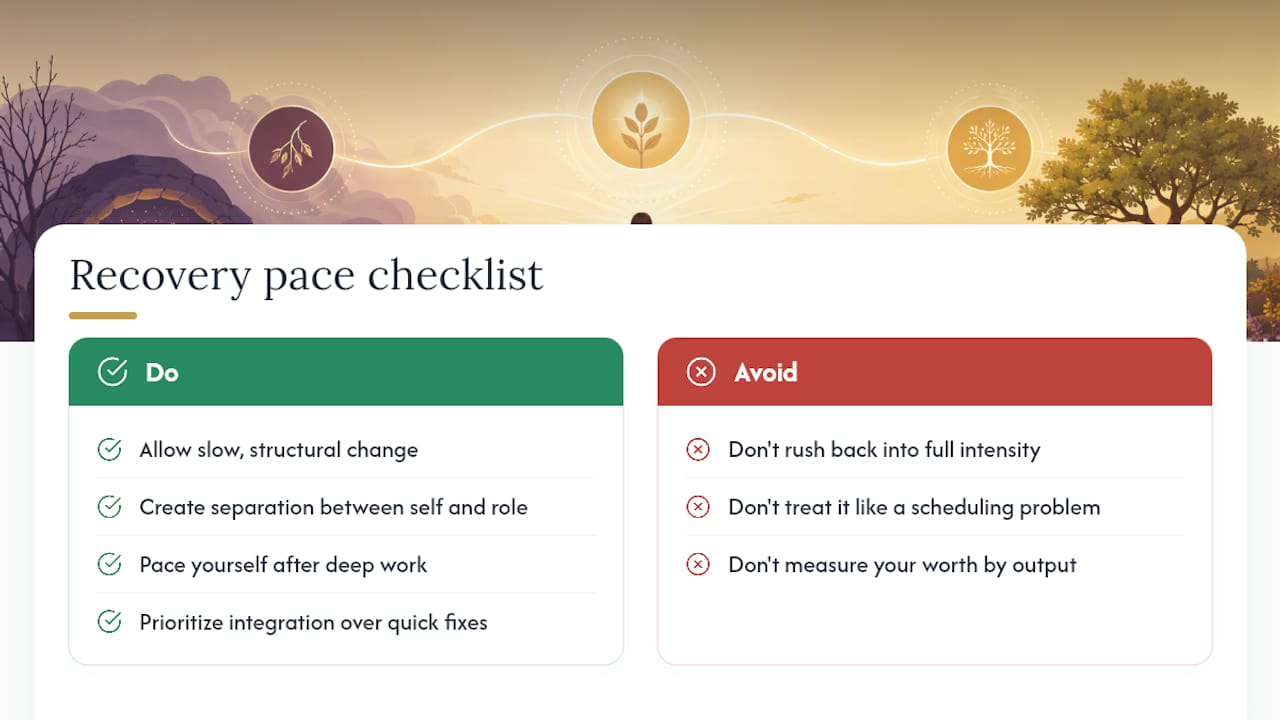
What gets underestimated is how much identity fusion drives the whole cycle. You can rest for a month and still burn out again in six weeks if the underlying pattern, measuring your worth by your output, never gets addressed. That’s the piece conventional advice tends to skip.
If I had to name one priority for someone starting this process, it would be this: don’t rush back into full spiritual intensity the moment you feel a little better. Integration takes time, and pacing yourself after any deep work, whether that’s prayer, energetic recalibration, or community re-engagement, is not weakness. It’s what actually makes the recovery hold.
— Shantana
Ready for Guided Support in Your Recovery?
If you’ve worked through the roadmap above and still feel stuck, that’s often the point where guided support makes the difference between temporary relief and lasting change. Shantana’s Quantum Energy Alignment Package is built for women in exactly this place: depleted by roles that no longer fit, ready to rebuild their connection to purpose without white-knuckling their way through another burnout cycle.

A typical first session often starts with an assessment of where energy is currently blocked or overextended, then moves into recalibration work paced to the nervous system rather than a fixed script. This work is designed to complement the boundary work and meaning practices covered earlier, not replace them. If you’re not ready for a full package, the Quantum Alignment Consultation offers a lower-commitment first step to see whether this kind of energetic work fits your situation. Either way, the next move is simple: book a session and see where your energy actually stands.
Sources
FAQ
What does spiritual burnout look like?
It usually looks like emotional numbness toward practices that once felt meaningful, mechanical participation in rituals, withdrawal from community, and fatigue that doesn’t improve with sleep.
What does the Bible say about spiritual burnout?
Scripture frames rest as obedience rather than failure. Matthew 11:28 offers rest as an invitation, and Exodus 18 shows Moses being told to delegate responsibility before he collapses under it.
How do you get out of spiritual burnout?
Recovery starts with immediate triage, reducing obligations and getting real rest, then moves into boundary-setting, small daily meaning practices, and reconnecting with safe community over the following weeks and months.
How long does it take to recover from severe spiritual burnout?
Mild cases can start improving within weeks, while severe or long-standing burnout often takes months of steady, nonlinear work involving boundaries, community support, and sometimes clinical care.
When should spiritual burnout be treated as a medical concern?
Seek professional care immediately if you notice suicidal thoughts, an inability to function in daily life, or symptoms consistent with PTSD or major depression.
Recommended
Comments